Round Robin or Knockout: What a Tournament Format Rewards
Round robin or knockout formats reward different kinds of consistency and risk. Learn how to read a result, track qualification and understand each match’s stakes.
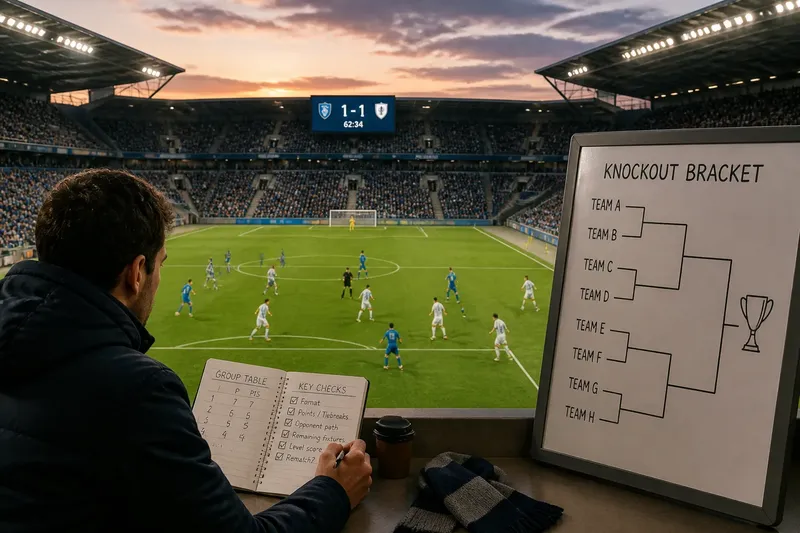
Round robin or knockout: what does a result actually tell you about a team? The answer depends on the tournament format. In a round robin, teams build a standing across repeated matches; in a knockout, a defeat can end the campaign. That difference shapes how to read a draw, a setback and the route to the title.
Neither format answers every question about which team is strongest. One makes a broader record central; the other makes each pairing and its consequence central. The useful distinction is what evidence the format gives you, and what it leaves unresolved.
Accumulated evidence
A round robin compares teams through a series of results. A loss matters, but later matches offer a chance to recover ground. The table records more than one performance, which makes it easier to see how a side responds to different opponents and changing circumstances.
That wider record comes with a complication: a result rarely explains itself. A draw might be welcome for a team protecting its position, yet costly for one chasing qualification. Points, matches remaining and tie-break rules all affect what the table says.
Watch the standings alongside the match; each result changes the context of the next one.
Pairings and paths
A knockout answers a narrower question: which team advances from this pairing? Winning is sufficient to continue, even if the team has not faced every entrant. The bracket therefore shapes the evidence. Opponents arrive in a particular order, and a difficult early draw can make a team’s route look very different from a rival’s.
This does not make the result meaningless. It means the title records success through a sequence of elimination matches, rather than a comparison of every team’s full set of results. A champion has cleared its route; the format does not claim that every possible matchup has been settled.
Read the bracket as part of the competition, not merely as its display.
Risk after setbacks
In a round robin, a team can often lose and still have matches left to repair its position. That remaining opportunity may encourage a tactical gamble, or allow a side to take a more cautious approach if its standing is already favourable.
In a knockout, the cost of a mistake is concentrated in the match. A side that falls behind may preserve its shape or commit more players forward, accepting the space that opens behind them. The choice depends on the score, time and competition rules; there is no single knockout style.
Say an invented team, Northbridge, concedes early while trailing in a hypothetical group match and a hypothetical knockout match. In the group game, its coach keeps the midfield compact and sends on a forward later; the team equalises, and the draw leaves its qualification prospects open. In the knockout, the coach moves a defender forward sooner; Northbridge creates a late chance but leaves space for a counterattack and loses. The worked comparison shows the trade-off: the group result preserves another route, while the elimination game makes the gamble more consequential.
After a setback, ask how much future opportunity remains before judging a team’s choice.
Rules behind the result?
Does a round robin always rank the best team?
It gives teams repeated opportunities to build a record, but the schedule and tie-break rules still matter. A close finish may be decided by criteria such as head-to-head results or goal difference, depending on the competition.
What happens if a knockout match is level?
The competition rules specify how an advancing team is decided. Some use extra time and then a shoot-out; others set out a different procedure, so check the event rules rather than assuming.
Why can a group match have different stakes for each side?
Earlier results, matches remaining and qualification criteria affect what each team needs. One side may benefit from a draw while the other needs a win or a particular scoreline.
Can teams meet again in the same tournament?
They can, if the competition structure allows it. In a round robin, a later-stage meeting may follow an earlier group match; in a knockout, a rematch depends on the bracket and each team advancing.
Reading a draw
A draw in a round robin is a result to interpret against the table. It may protect a team’s position or leave it needing points in a later fixture. In a knockout, a level score at the end of regular time is usually a transition to the deciding procedure, not the final result.
That distinction matters to spectators. In a group match, the score can be judged against the wider campaign. In an elimination match, attention shifts to what happens next: extra time, a shoot-out or the procedure stated in the rules.
Before calling a draw good or bad, check what each team needs from the standings or bracket.
What to watch
Use these checks to work out what the format makes visible. Each item connects an observation to a decision about how to read the match.
- Check whether the match is part of a round robin; if teams have more fixtures and results add to a table, then judge the result against their remaining route, otherwise check whether the match is an elimination pairing.
- Check the points and tie-break rules; if teams can finish level, then follow the stated tie-break order, otherwise compare their points and matches remaining.
- Check the bracket and opponent path; if one side has faced a different route, then avoid treating the title as proof that every matchup was settled, otherwise assess the completed sequence of pairings.
- Check whether a team has future fixtures after a setback; if it does, then consider how it can recover its standing, otherwise focus on the choices available before elimination.
- Check what a level score triggers; if the rules call for extra time or a shoot-out, then treat the end of regular time as a new phase, otherwise follow the competition’s specified procedure.
- Check whether the same opponents can meet again; if the format allows a rematch, then compare the teams’ adjustments, otherwise treat the contest as a single opportunity to advance or improve a standing.
The main search question, round robin or knockout, is best answered by asking what kind of record you want to understand. A round robin lets you follow accumulated results and changing qualification prospects. A knockout makes the bracket, the immediate pairing and the response under elimination pressure more visible.
One practical habit helps in either format: find the competition’s rules before interpreting the score. A table without its tie-break criteria and a bracket without its deciding procedure are both only half the story.